
Online Service
Working Time
Mon. To Sat. 8:30-17:30
Contact Information
info@hanzo.cn
The Secret of Three Common Welding Technologies: MIG, MAG and Flux-Cored Welding
Category:
Knowledge
Date:
2025-11-26
Click:
1908
Source:
Knowledge
Original Link:
displaynews.html?id=6592811577852736
MIG welding is for non-ferrous metals, MAG welding for ferrous metals, and flux-cored welding for complex scenarios like outdoor work...
In the "connected world" of industrial manufacturing, welding technology is an indispensable core force. When we see the seamless connection of automobile bodies and the solid support of steel structure bridges, various welding processes are behind the precise operation. Among them, MIG welding, MAG welding and flux-cored welding are the three most widely used technologies, but many people often confuse them. Today, we will uncover their mysteries and see what unique skills these "steel tailors" have.
Of the Same Origin: All Belong to the "Consumable Electrode" Family
Before distinguishing the three, we first clarify a common attribute: MIG welding, MAG welding and flux-cored welding all belong to the category of "consumable electrode arc welding". Simply put, they all realize connection by melting the welding wire itself by the electric arc, forming droplets that transition to the base metal (the metal to be welded), and finally cooling and solidifying. However, the seemingly similar "working mode" has taken three distinct application paths due to differences in protection methods and core accessories.
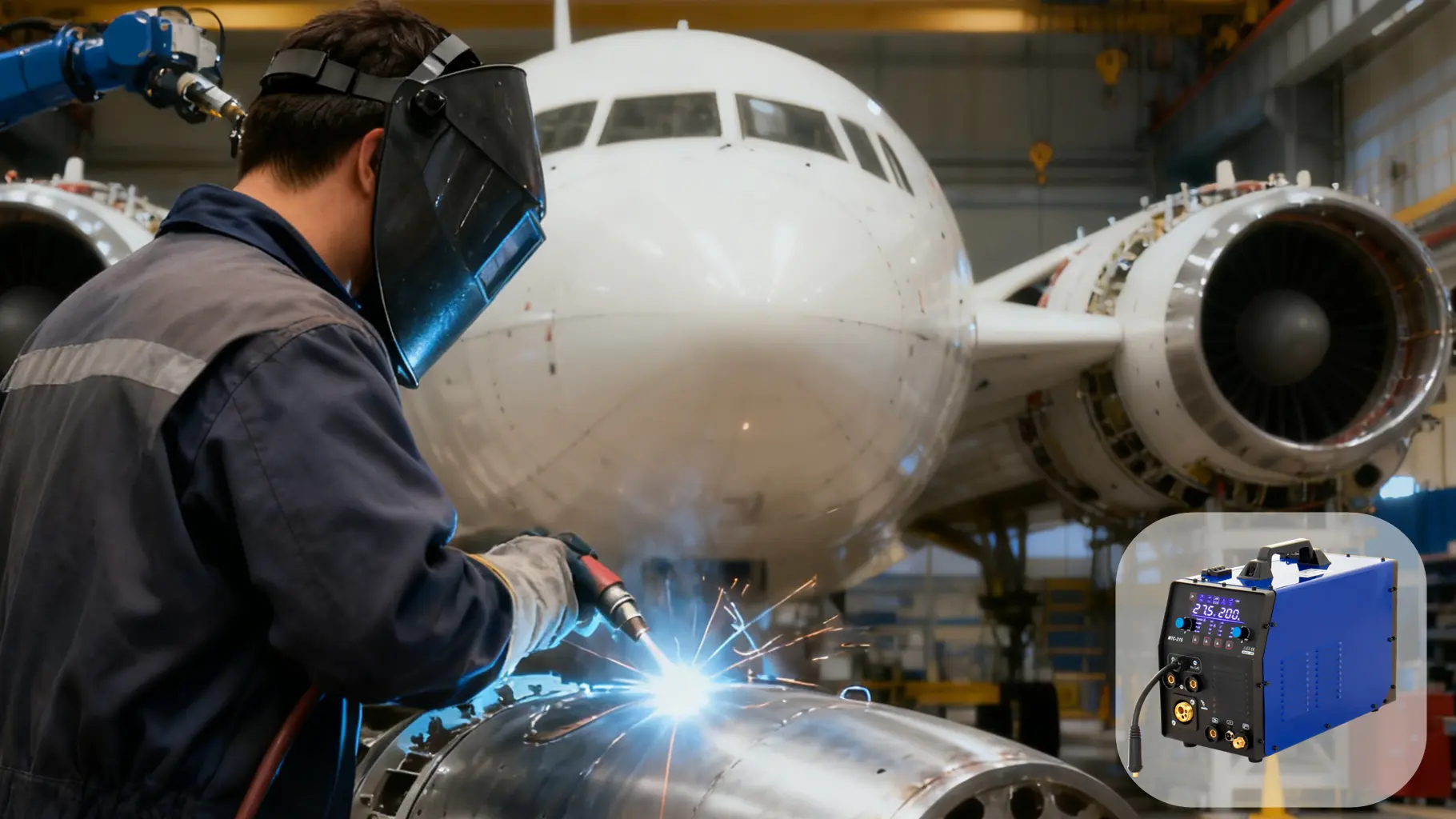
MIG Welding: The "Exclusive Guardian" of Non-Ferrous Metals
The full English name of MIG welding is Metal Inert Gas Arc Welding, which is translated into Chinese as "metal inert gas shielded arc welding". The "inert gas" in the name reveals its core feature - using inert gas with stable chemical properties to "escort" the molten pool.
During welding, MIG welding uses solid wire as the electrode. At the same time, argon (Ar), helium (He) or argon-helium mixture will continuously cover the electric arc and molten pool, acting as an "invisible barrier" to isolate the air and prevent non-ferrous metals that are easy to oxidize, such as aluminum and magnesium, from being eroded by oxygen and nitrogen. This "gentle protection" ensures extremely high weld quality, with full metal luster and almost no oxidation defects.
Because of this, MIG welding has become a "favorite" in fields such as aerospace, aluminum alloy door and window manufacturing, and stainless steel kitchenware production. For example, the frame connection of the aluminum alloy luggage we use daily relies on the precise welding of MIG welding, which not only ensures the strength but also maintains the beauty of the metal surface. However, the cost of helium is relatively high, and it is usually only used in high-end manufacturing with extremely high welding quality requirements.
MAG Welding: The "Efficient Worker" of Ferrous Metals
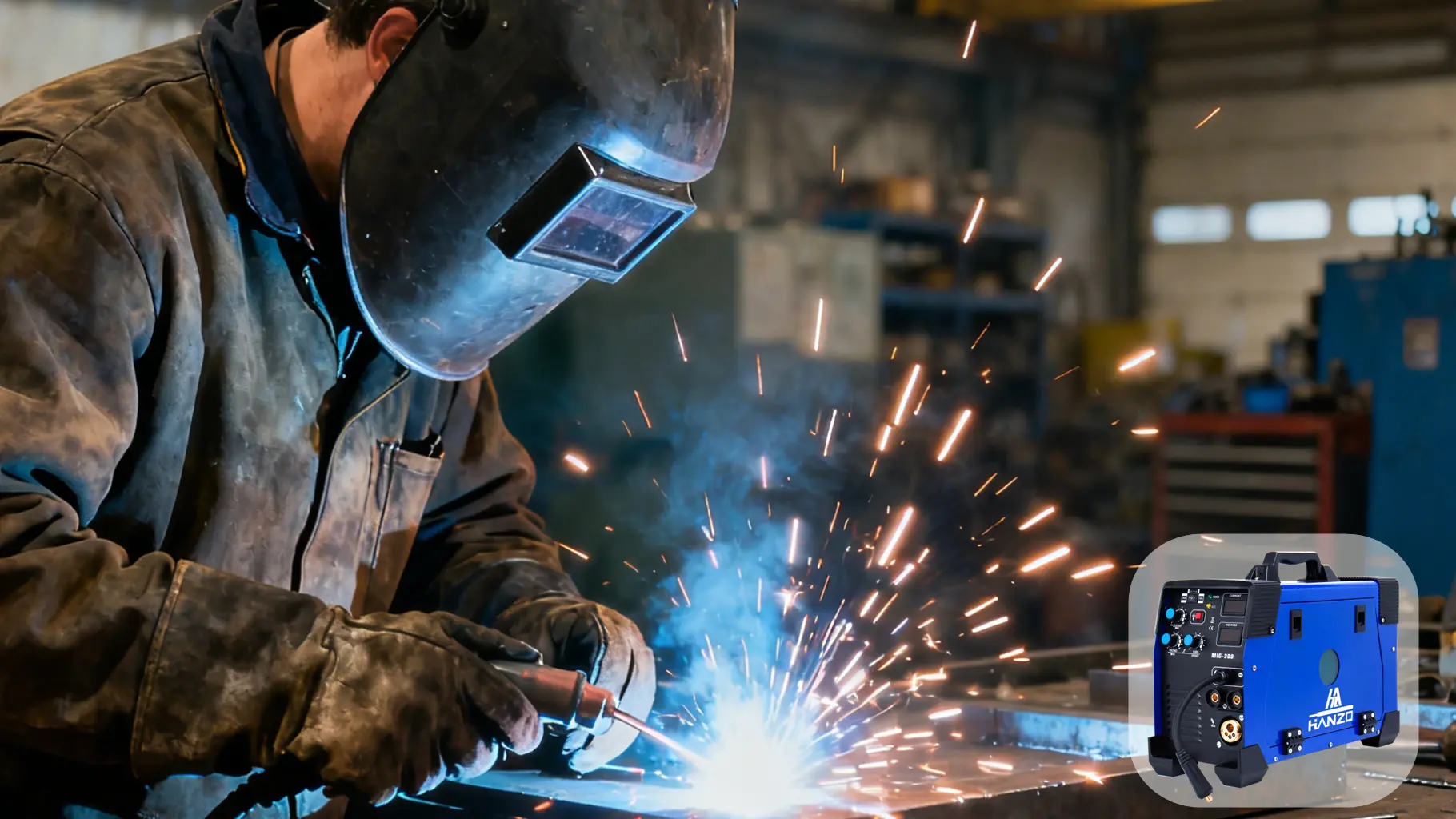
MAG welding differs from MIG welding by only one word. Its full English name is Metal Active Gas Arc Welding, and its Chinese name is "metal active gas shielded arc welding". Its core change is replacing "inert gas" with "active gas" or "inert + active gas mixture".
Common shielding gas combinations include pure carbon dioxide (CO₂), 80% argon + 20% carbon dioxide rich argon mixture, etc. Active gas can not only protect the molten pool but also have a slight metallurgical reaction with the molten pool metal, such as deoxidation and desulfurization, thereby improving the weld formation and reducing welding spatter. MAG welding also uses solid wire, but it is better at "controlling" ferrous metals such as carbon steel and low-alloy steel.
In the automobile manufacturing workshop, most of the welding lines for the car body frame adopt MAG welding. It has high welding efficiency, relatively low cost, and can be adapted to automated operations, completing thousands of welding joints a day. It can also be often seen in the connection of gears in mechanical processing and steel beams in steel structure engineering.
Flux-Cored Welding: The "All-Rounder" with Flexibility
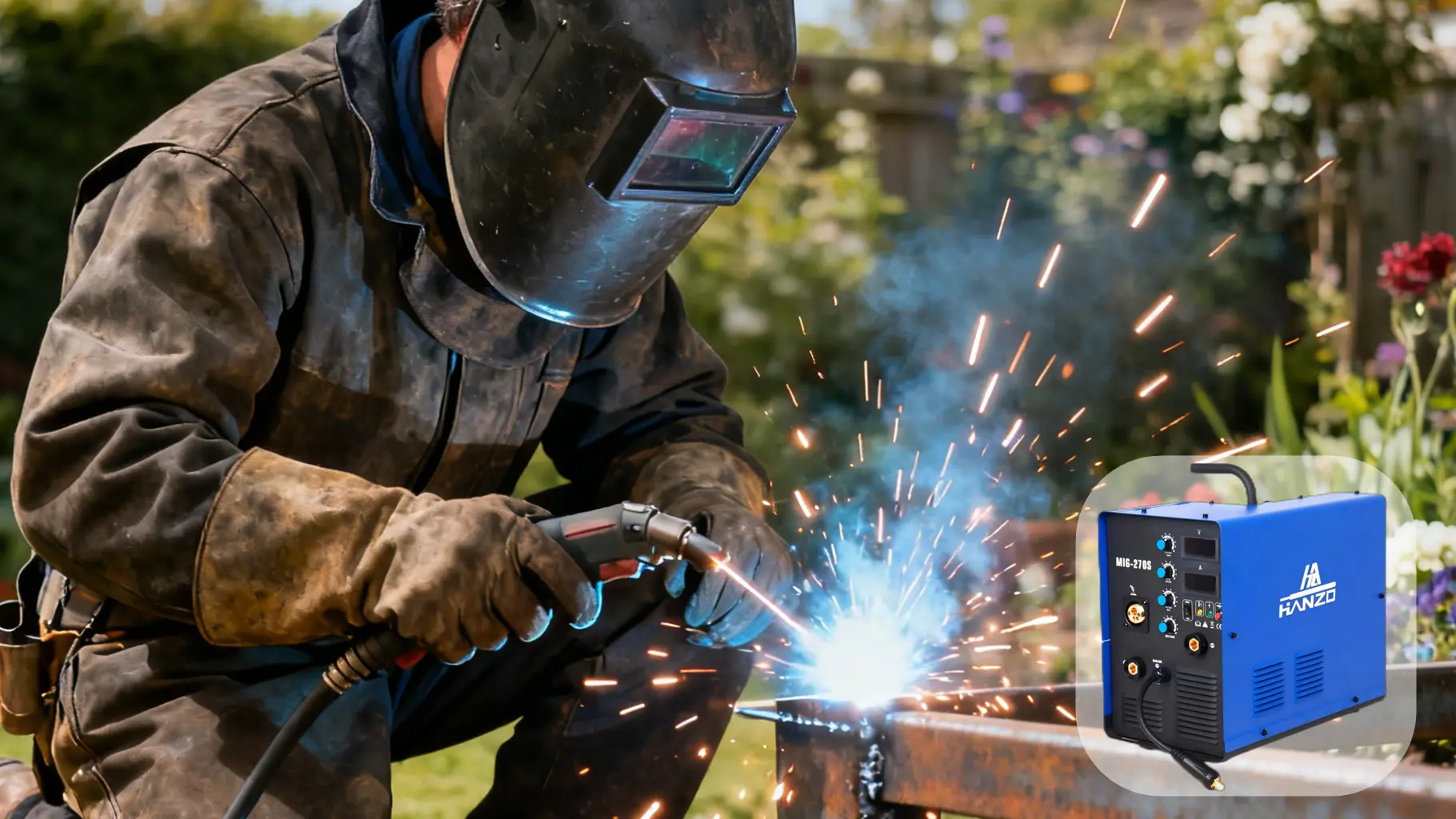
Flux-cored Arc Welding (FCAW for short) is the most "flexible" one among the three. Its core secret lies in the welding wire - the wire is not solid but has a tubular structure, filled with flux (commonly known as "flux core") inside.
According to different protection methods, it is divided into two major "schools": one is the "self-shielded type". During welding, the flux core decomposes when heated, which not only produces shielding gas to isolate the air but also forms slag covering the weld surface. No additional gas cylinder is required, which is perfectly suitable for outdoor operations or field emergency maintenance, and its wind resistance is far better than MIG/MAG welding that requires external gas; the other is the "gas-shielded type", which needs to be matched with carbon dioxide or rich argon mixture, with higher deposition efficiency and suitable for medium and thick plate welding.
Flux-cored welding has large penetration depth and high weld strength, and is widely used in fields such as shipbuilding, heavy machinery, and oilfield pipeline laying. For example, the steel structure welding of offshore drilling platforms often cannot use MIG/MAG welding due to strong sea wind. At this time, the self-shielded flux-cored welding becomes the best choice, which can ensure the welding quality even in harsh environments. However, slag will remain on the weld surface, which needs to be cleaned up subsequently, which is its small "shortcoming".
Understand the Core Differences at a Glance
To help everyone distinguish the three more clearly, we have sorted out the key parameter comparison:
Comparison Dimension | MIG Welding | MAG Welding | Flux-Cored Welding (FCAW) |
Core Protection | Pure inert gas | Active gas/mixed active gas | Flux core gas generation + slag (self-shielded); flux core + external gas (gas-shielded) |
Wire Type | Solid wire | Solid wire | Flux-cored wire |
Applicable Materials | Aluminum, magnesium, copper, stainless steel | Carbon steel, low-alloy steel | Carbon steel, low-alloy steel, stainless steel |
Typical Scenarios | Aerospace, non-ferrous metal processing | Automobile manufacturing, steel structure engineering | Shipbuilding, outdoor welding, emergency maintenance |
Summary: No "Best", Only "Most Suitable"
MIG welding's "precise protection", MAG welding's "high efficiency and economy", and flux-cored welding's "flexibility and durability" - the three welding technologies each have their own strengths. The choice of which process does not depend on the "level" of the technology itself, but on the workpiece material, operating environment, quality requirements and cost budget.
The development of these "steel connection technologies" has witnessed the progress of industrial manufacturing. Next time you see the metal products around you, you might as well try to guess which welding technology is used to "sew" it!
|
|
|
Connect With Us
|
+86-13923298312 info@hanzo.cn New Lighting Source Industry Zone B3, Luocun Town, Nanhai, Foshan, Guangdong, China. 
|